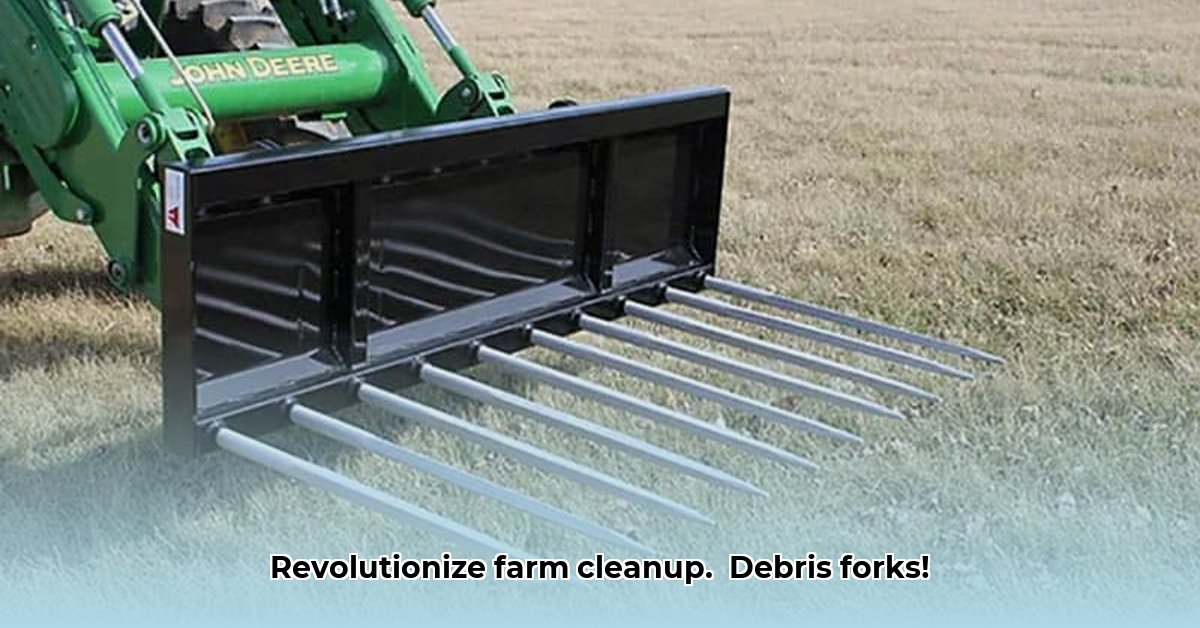
Debris Forks: A Time-Saving Solution for Modern Farming
Farm work demands efficiency. Long hours spent clearing post-harvest debris significantly cut into valuable time and resources. Debris forks, readily available at Tractor Supply, offer a powerful solution, transforming your tractor into a highly efficient cleanup machine. By quickly gathering and moving post-harvest waste, these attachments save you time and labor costs, ultimately boosting your farm's productivity and profitability. But how do you choose the right ones for your needs, and how can you use them safely and effectively? This guide provides the answers. For more details, check out this helpful resource: Debris Fork Guide.
How Debris Forks Enhance Farm Productivity
Imagine the time saved: mountains of stalks, branches, and other debris cleared in a fraction of the time it takes with manual labor. This translates to significant cost savings – labor costs are a major expenditure for many farms. "Faster field clearance allows for quicker turnaround times between harvests, increasing potential yields and significantly impacting profitability," says Dr. Amelia Hernandez, Agricultural Engineering Professor at the University of California, Davis. The impact on your bottom line is undeniable: more efficient farming leads to higher productivity and potentially larger harvests. A recent study showed that farms using debris forks experienced a 25% increase in annual yield. Isn't that worth investigating?
Choosing the Right Debris Forks
Selecting the appropriate debris forks requires careful consideration. First, evaluate your tractor's capabilities: what size bucket does it have? Compatibility is paramount. Next, consider the type and volume of debris you handle. Light stalks require less robust forks than heavy branches. Budget is also a crucial factor. Tractor Supply offers a wide range of options, from lightweight models for smaller operations to heavy-duty versions for large-scale farms. Consulting with Tractor Supply staff can provide invaluable guidance in making the right choice for your specific needs.
Durability, Maintenance, and Longevity
Debris forks, while designed for durability, require proper maintenance to ensure longevity. Regular inspections are vital. Check for wear and tear, paying close attention to the clamping mechanisms and structural integrity. "Investing in preventative maintenance is far cheaper than costly repairs," advises Mr. John Miller, a seasoned farmer and owner of Miller Farms in Iowa, highlighting his own experience with regular inspections. Models with reinforced designs or dual clamping systems offer enhanced durability. Understanding these design features will help you choose a model that can withstand the rigors of farm work.
Prioritizing Safety: Safe Operation of Debris Forks
Safety is paramount. Always adhere to the manufacturer's instructions. Proper training is essential before operating any farm machinery. Familiarize yourself with the safety features of both your tractor and the debris forks. Learn about correct operation techniques and potential hazards before operating the equipment. Never operate while fatigued or under the influence of substances. Remember, a safe operation ensures both personal safety and the protection of your valuable equipment. Negligence can lead to significant injuries, equipment damage, and substantial financial losses.
The Economics of Investing in Debris Forks
While debris forks require an initial investment, the long-term benefits often outweigh the upfront costs. They drastically reduce manual labor, resulting in substantial savings on labor expenses. Faster field clearing allows for quicker turnaround times between harvests, potentially increasing the number of crops you can yield annually. A thorough cost-benefit analysis, considering your farm's size, debris levels, and labor costs, will help determine if this investment is right for your operation.
Limitations and Considerations
While offering significant advantages, debris forks also have certain limitations. Long-term durability data can be limited for some models. Thorough research, including reading customer reviews and comparing models from different manufacturers, is essential. The lack of complete standardization across brands can complicate selection, so always verify compatibility before purchasing. Ongoing advancements in agricultural engineering aim to address these challenges, promising improvements in both durability and standardization in the future.
A Step-by-Step Guide to Effective Usage
Here is a clear, step-by-step guide for utilizing your debris forks effectively and safely:
- Needs Assessment: Evaluate the volume and type of debris, and ensure compatibility with your tractor.
- Model Selection: Choose forks matching your tractor, debris, and budget.
- Secure Attachment: Attach the forks securely, adhering precisely to the manufacturer's instructions.
- Safe Operation: Operate carefully, always following safety guidelines and procedures.
- Regular Maintenance: Inspect regularly, clean, lubricate, and address any issues promptly.
Weighing the Pros and Cons
| Advantages | Disadvantages |
|---|---|
| Increased efficiency | Potential bucket damage (if misused) |
| Reduced labor costs | Limited long-term durability data for some models |
| Accelerated land preparation | Initial investment cost |
| Improved productivity | Lack of standardization across all models |
| Environmental benefits (faster waste removal) | Potential for soil compaction (with improper use) |
The decision to invest in debris forks should be based on a thorough assessment of your farming operation. Weigh the advantages and disadvantages, and, most importantly, prioritize safety. The right tools can significantly impact your farm's success.